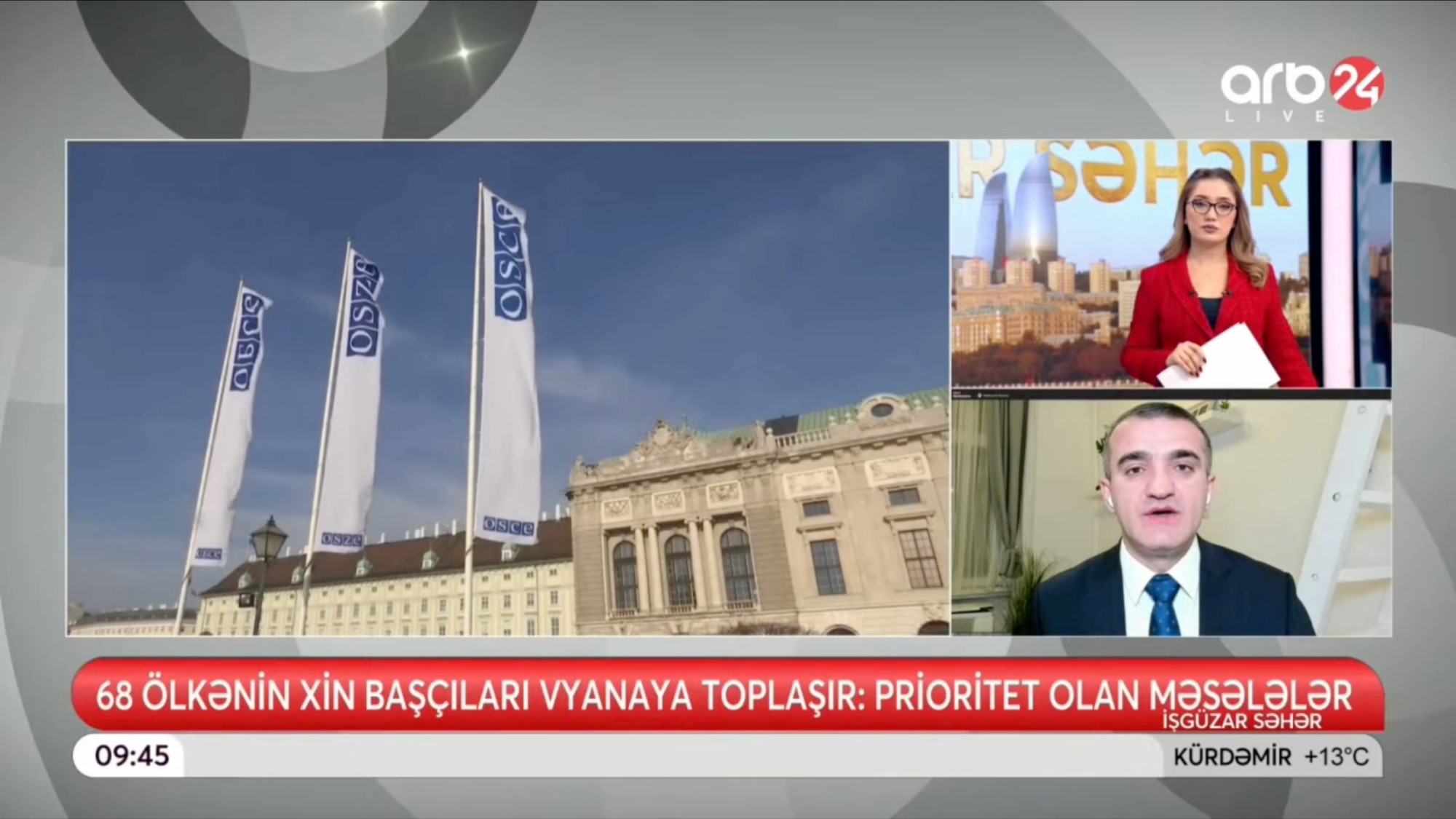
The OSCE Ministerial Council meeting taking place today in Vienna is held amid one of the most severe political crises the organization has faced in recent years. With the participation of 57 foreign ministers, the discussions focus on the institutional future of the OSCE, the fragmentation of the European security architecture, and efforts to revive the organization, which has effectively become paralyzed.
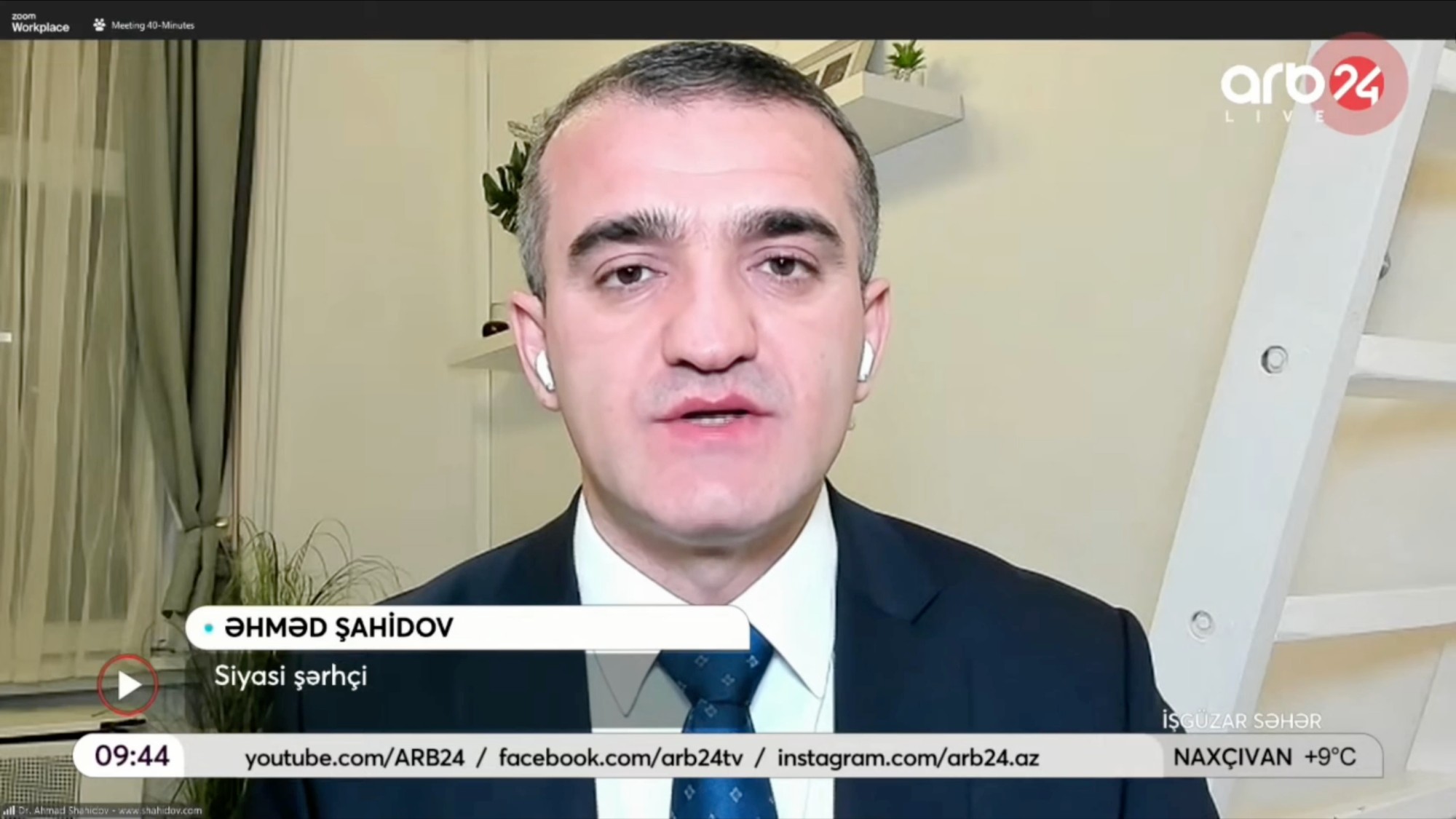
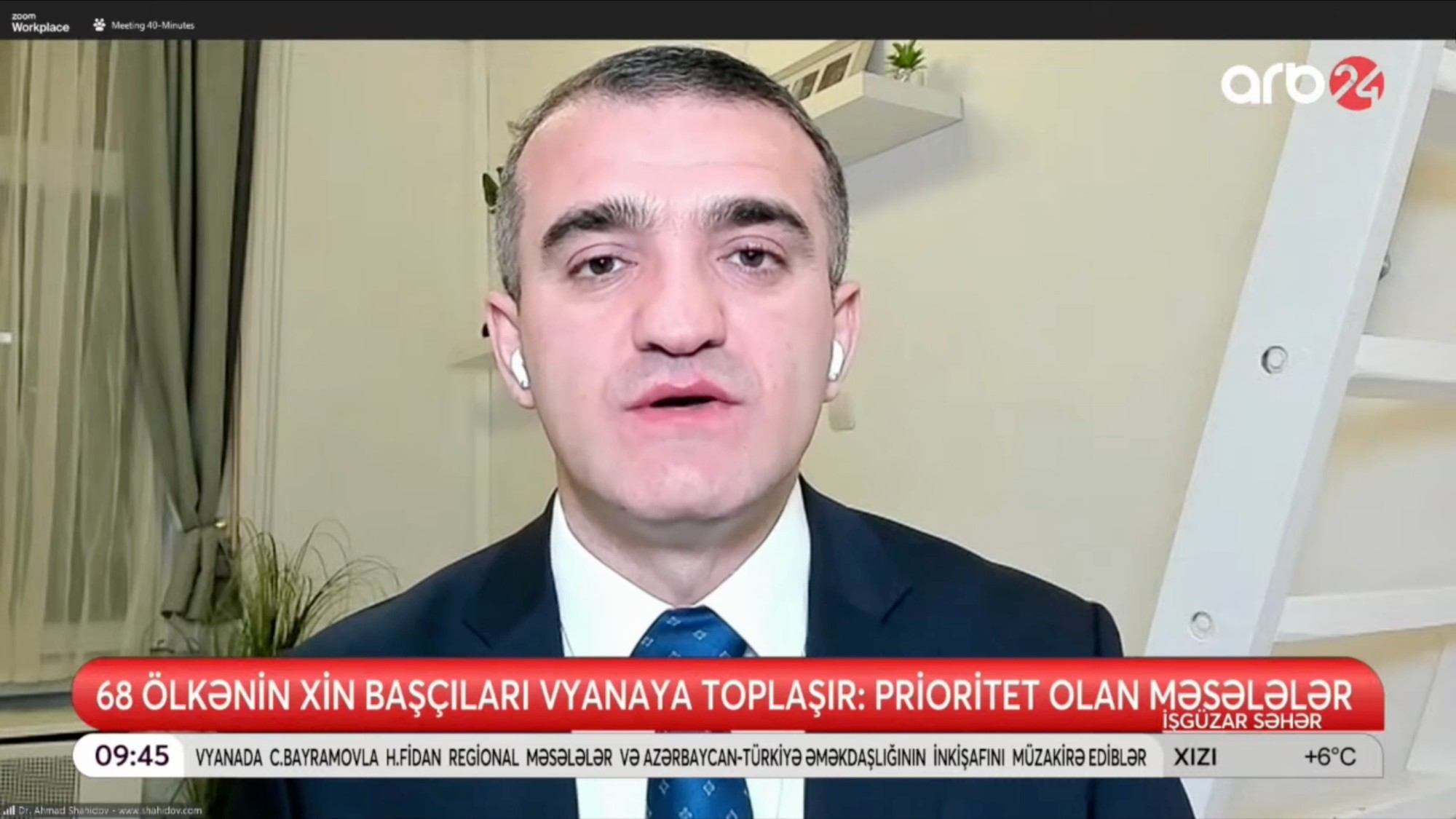
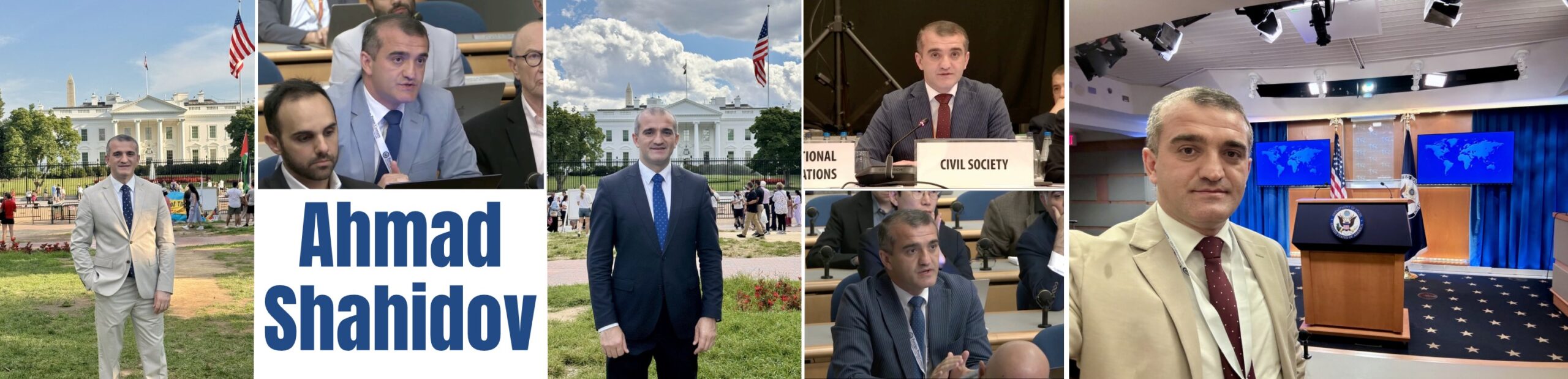
Human rights defender Ahmad Shahidov, who is currently in Vienna closely following the meeting, told ARB24 Television that this session is far more than an ordinary annual gathering: “The failure to adopt the budget, restrictions on field missions, and the blockage of the consensus mechanism have turned the OSCE into a structure that can hardly function. Therefore, the core issue in Vienna is restoring dialogue and defining the organization’s future mandate.”
Ahmad Shahidov added that European media describe the meeting as “a test for the OSCE’s future,” noting that the indirect focus remains on the Ukraine–Russia war: “Although there is no separate ‘Ukraine’ item on the official agenda, the main theme of all closed-door discussions is the conflict. The humanitarian situation in Ukraine, border security concerns, and Russia’s new terms are expected to be seriously debated. The OSCE’s current format cannot adequately respond to crises like Ukraine, which raises further questions about the organization’s relevance.”
He concluded that the Vienna meeting is unlikely to produce major breakthroughs, yet the very continuation of dialogue is considered significant against the backdrop of rising geopolitical tensions.