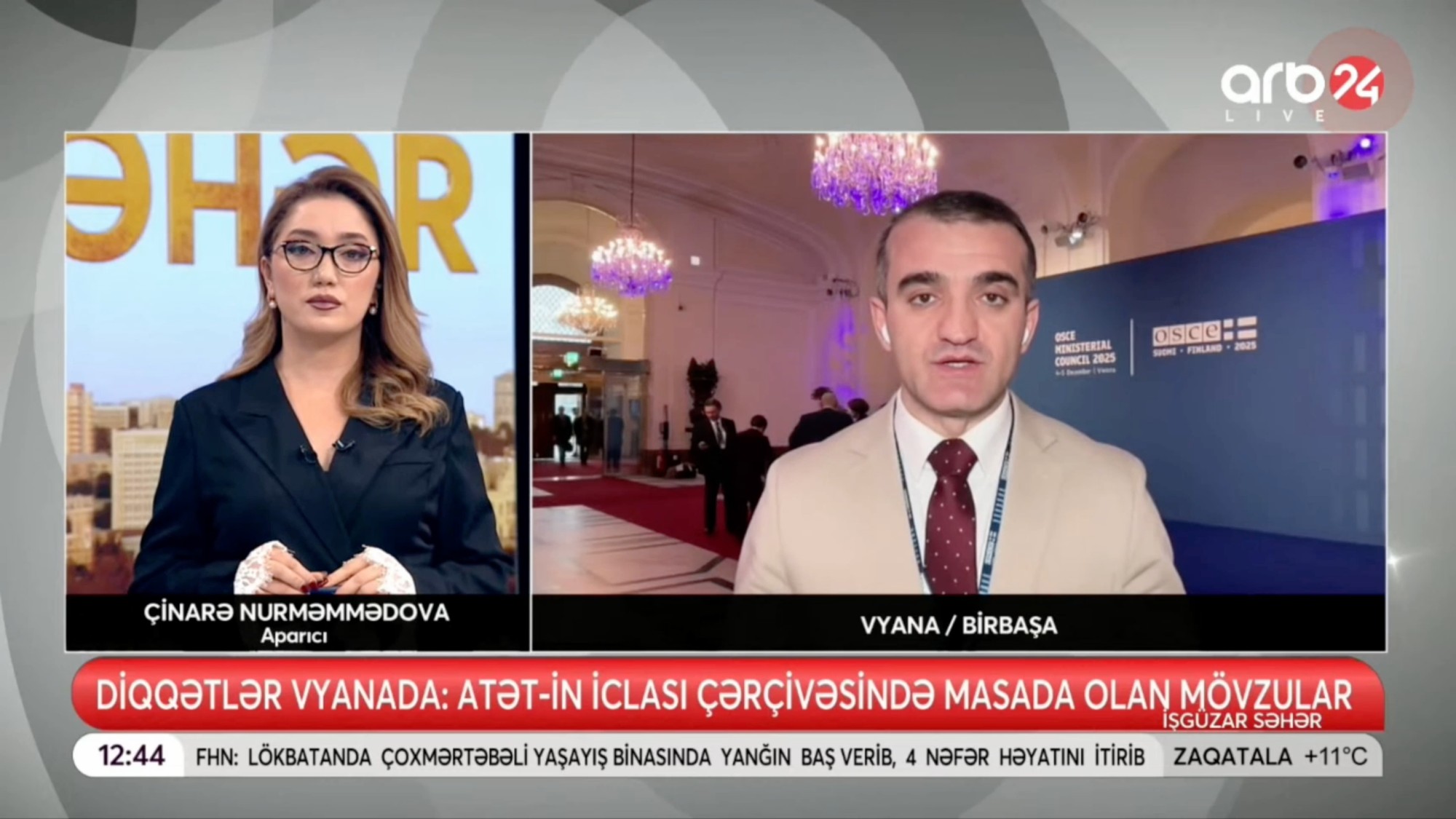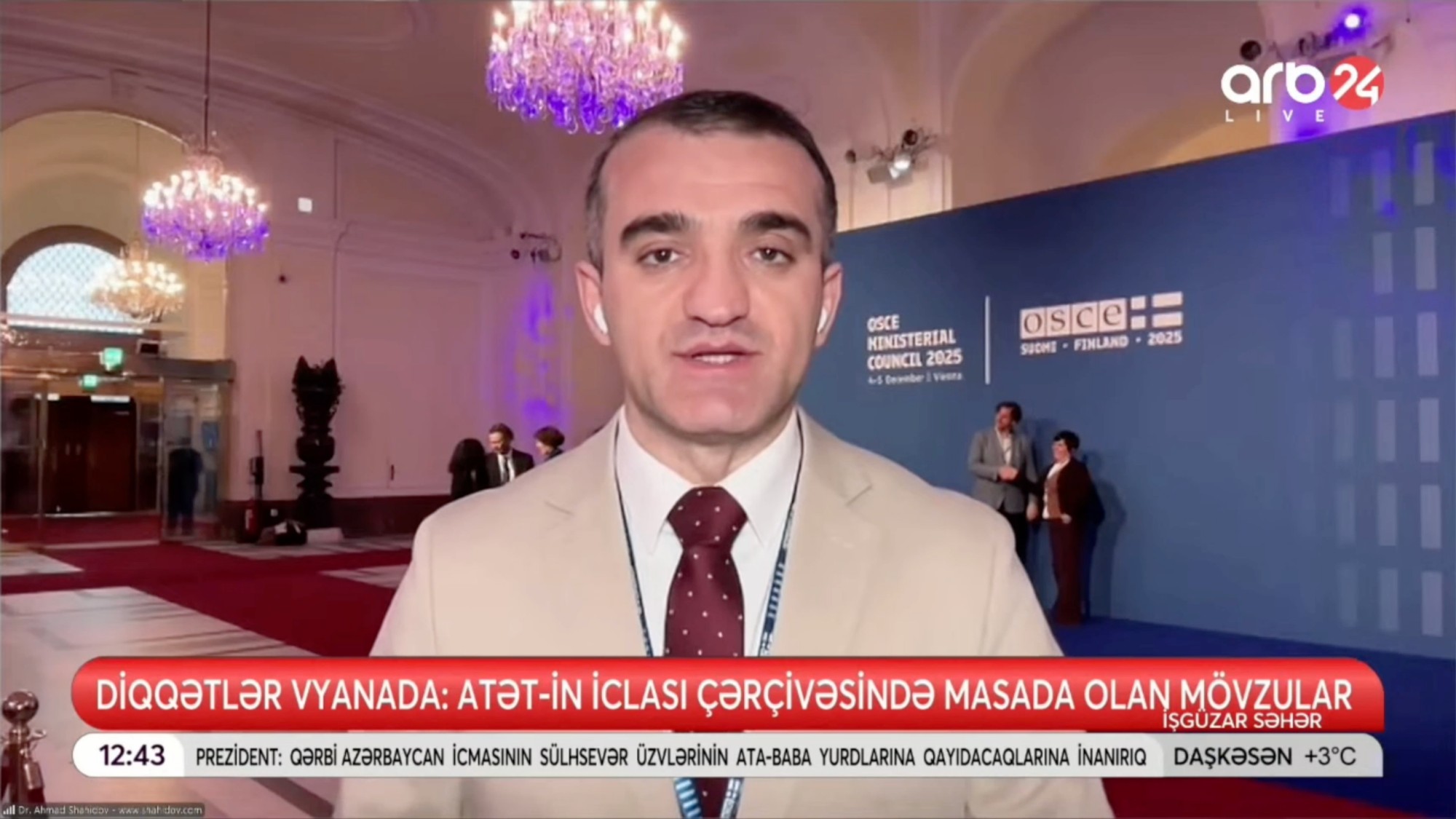
The 32nd OSCE Ministerial Council meeting in Vienna continues amid discussions on the organization’s political crisis, commitment to the Helsinki principles, and wider regional security challenges. Ministers addressing the session highlighted the future of the OSCE, Ukraine’s sovereignty, budget issues, and in particular the progress achieved in the South Caucasus. The Luxembourg Foreign Minister’s support for the Baku–Yerevan peace agenda was described as the most positive political development in the OSCE region in 2025.
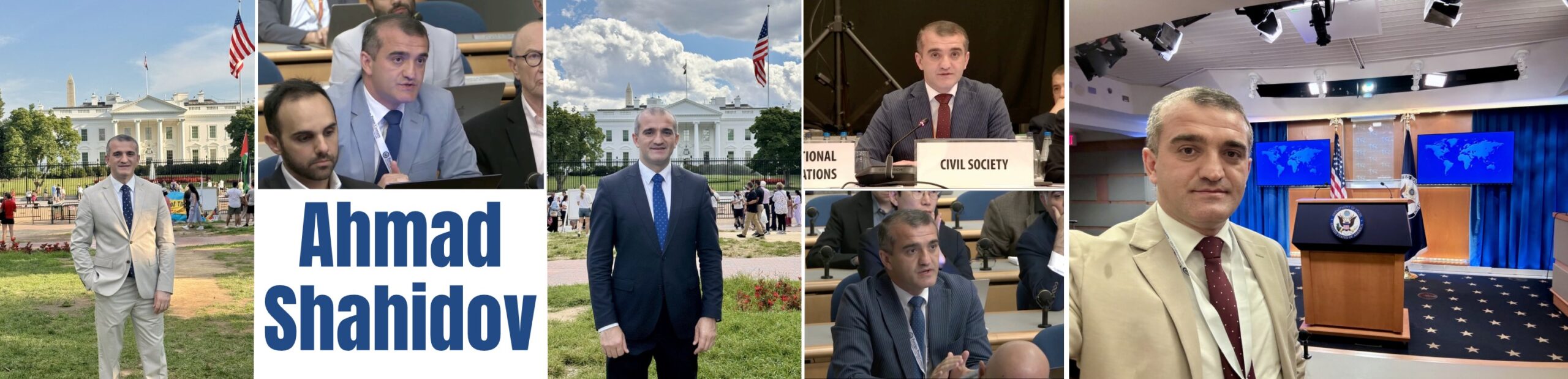
Speaking to ARB24 Television from Vienna, human rights advocate Ahmad Shahidov stated that the emerging peace agreement between Azerbaijan and Armenia represents the most realistic prospect for long-term stability in the region in many years, and this point has been strongly emphasized across international platforms. He noted that the messages voiced at the meeting showed that overcoming the OSCE’s institutional crisis will require prioritizing dialogue and reconciliation. Shahidov added that the steps taken by both countries are closely monitored by regional states and international actors.
Ahmad Shahidov further stated that the discussions held today once again underline the need for a renewed cooperation framework within the OSCE. He emphasized that achieving peace in the South Caucasus is not only important for regional stability but also constitutes a strategic element of Europe’s broader security architecture, marking one of the most significant positive turning points in the OSCE area in 2025.