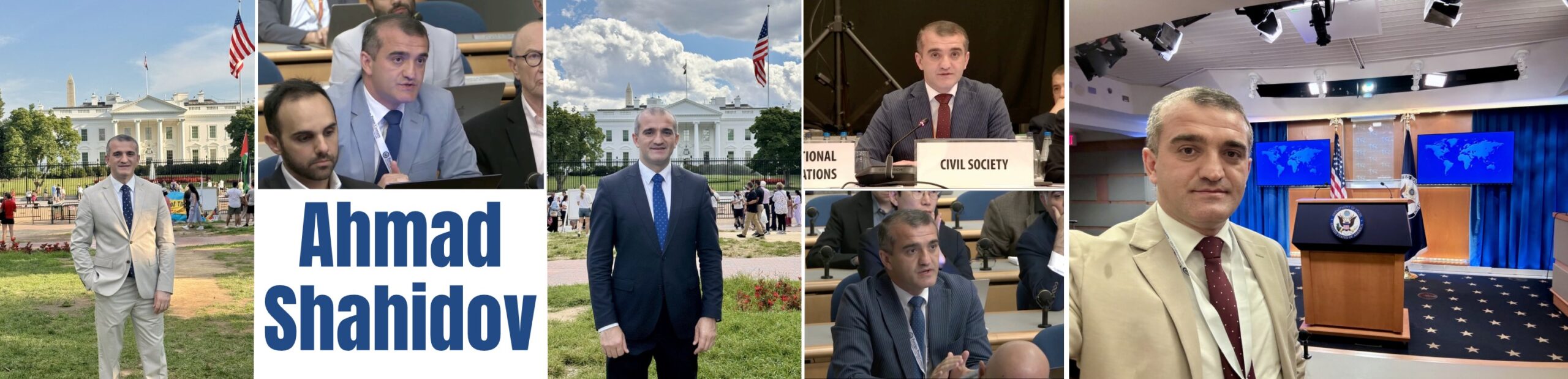
The 32nd OSCE Ministerial Council meeting in Vienna continues against a backdrop of institutional crisis, commitment to the Helsinki principles, and regional security concerns. Statements delivered by participating ministers highlighted the future of the OSCE, the situation in Ukraine, the ongoing budget deadlock, and particularly the progress achieved in the South Caucasus. The Luxembourg Foreign Minister’s support for the Baku–Yerevan peace process was described as one of the most significant political developments in the OSCE region in 2025.
Speaking to REAL TV from Vienna, human rights defender Ahmad Shahidov stated that the overall atmosphere of the meeting shows the OSCE must prioritize dialogue and reconciliation in order to overcome its current paralysis. According to him, the emerging peace agreement between Azerbaijan and Armenia represents the most realistic prospect for stability in the region in many years, and international support for this process demonstrates a strengthening political will. Ahmad Shahidov emphasized that the progress between the two countries is being closely monitored by regional states and international actors.
Human rights defender Ahmad Shahidov added that the messages voiced during the discussions clearly indicate the OSCE’s need for a renewed cooperation framework adapted to the realities of a new geopolitical era. He stressed that achieving peace in the South Caucasus is strategically important not only for regional stability but also for Europe’s broader security architecture. Ahmad Shahidov noted that Azerbaijan plays a constructive role in this process and remains one of the key actors shaping the region’s future security order.


