The most dangerous military confrontation in the Middle East in recent years has come to an end. The 12-day war between Iran and Israel escalated tensions in the region, resulting in both military and civilian casualties. Throughout the conflict, Iran’s nuclear facilities and military infrastructure were repeatedly targeted by airstrikes. In response, Iran launched missile and drone attacks against various strategic sites in Israel. According to official reports, the clashes remained localized and did not result in large-scale human losses.
With the involvement of international mediators, a ceasefire agreement has been reached between the parties. Relative calm currently prevails in the region. However, observers warn that the situation remains fragile and could flare up again at any moment.
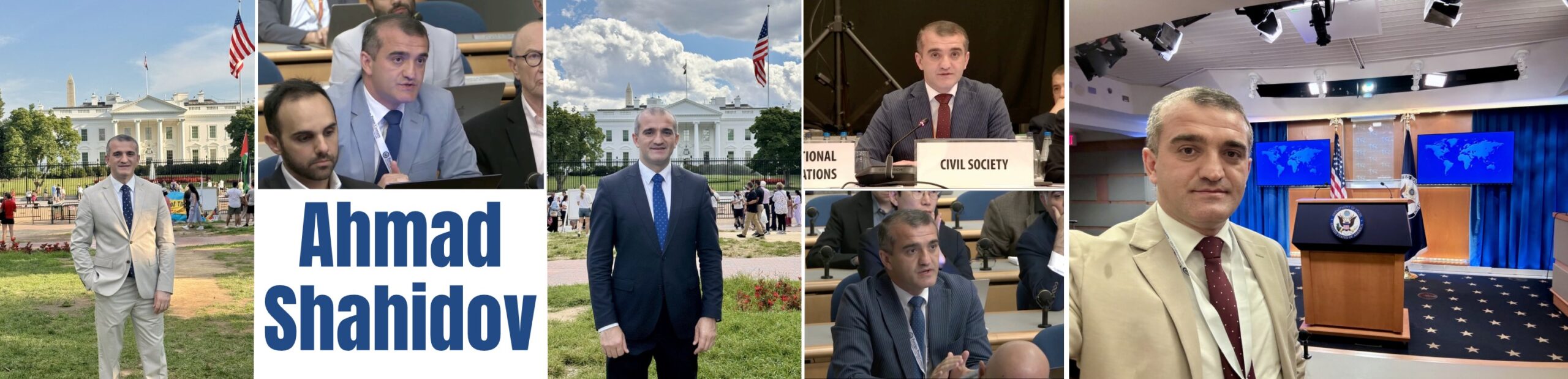
Speaking to ARB24 from Washington DC, political analyst Dr. Ahmad Shahidov stated that the developments are being closely monitored in the U.S. capital and that the situation is clearer when viewed from there. According to him, this war is not just between Iran and Israel but represents a major geopolitical confrontation involving conflicting interests of international powers.
Dr. Ahmad Shahidov noted that there are two opposing views in Washington regarding the elimination of Iran’s nuclear potential. One group claims that military operations have achieved their goals successfully, while another believes that military action was unnecessary and that the issue should be resolved through diplomacy, urging the resumption of negotiations.
Commenting on American public opinion, Dr. Ahmad Shahidov emphasized that U.S. citizens are against a new large-scale war in the Middle East. According to polls conducted by CNN and Gallup, the majority of Americans are concerned about the significant social and economic consequences such a conflict could have on the country.
In recent days, CNN and The New York Times have also published extensive articles covering the bombing of Iran, the strategic plans of the U.S. and Israel, and the fragile ceasefire. These reports explore the possible continuation of the war, the future of Iran’s nuclear program, and the evolving political landscape of the region.
Finally, Dr. Ahmad Shahidov stated that the ceasefire remains extremely fragile and that to restore lasting stability in the region, diplomatic negotiations must urgently resume, and the efforts of international mediators must be intensified.


