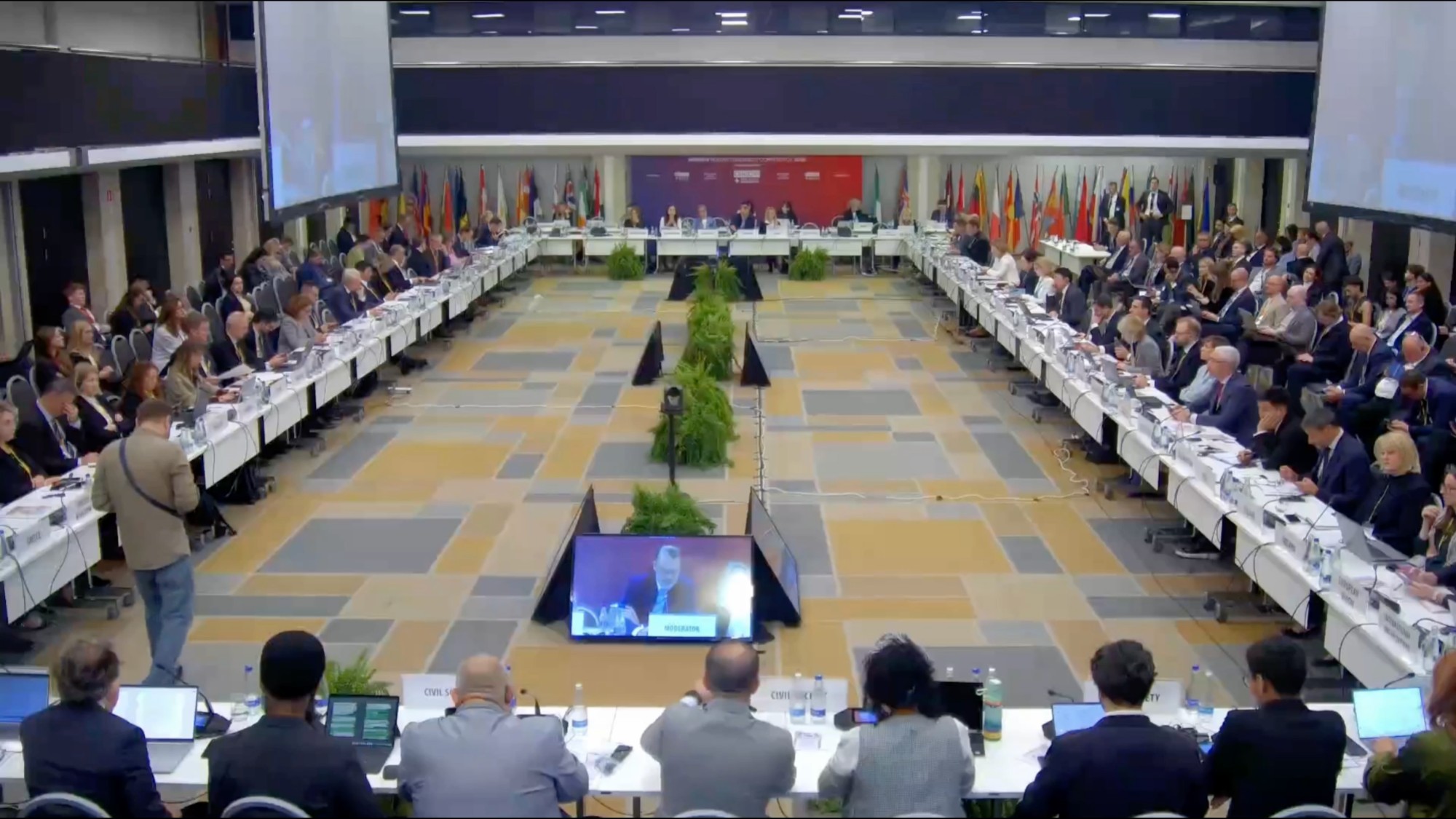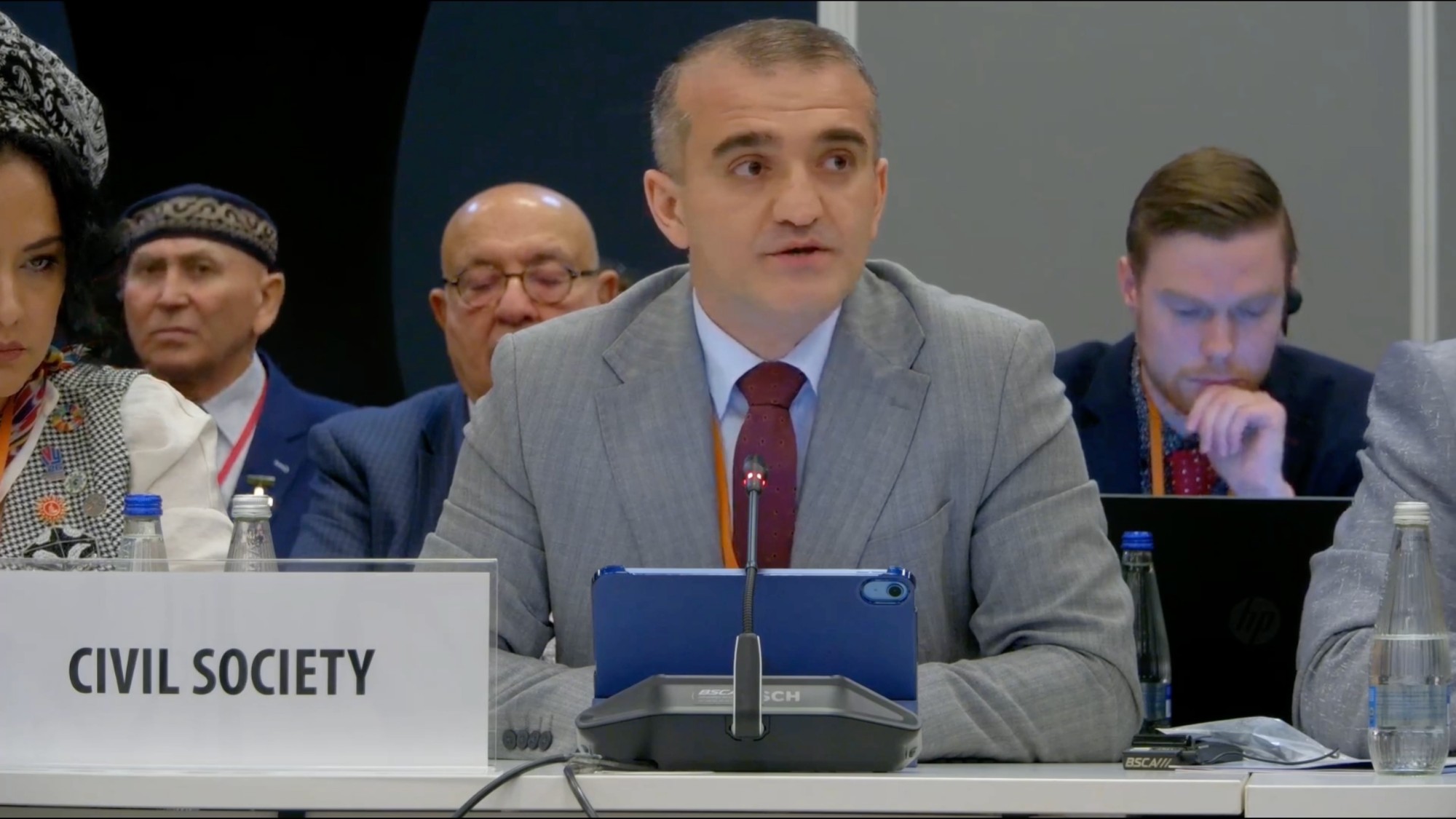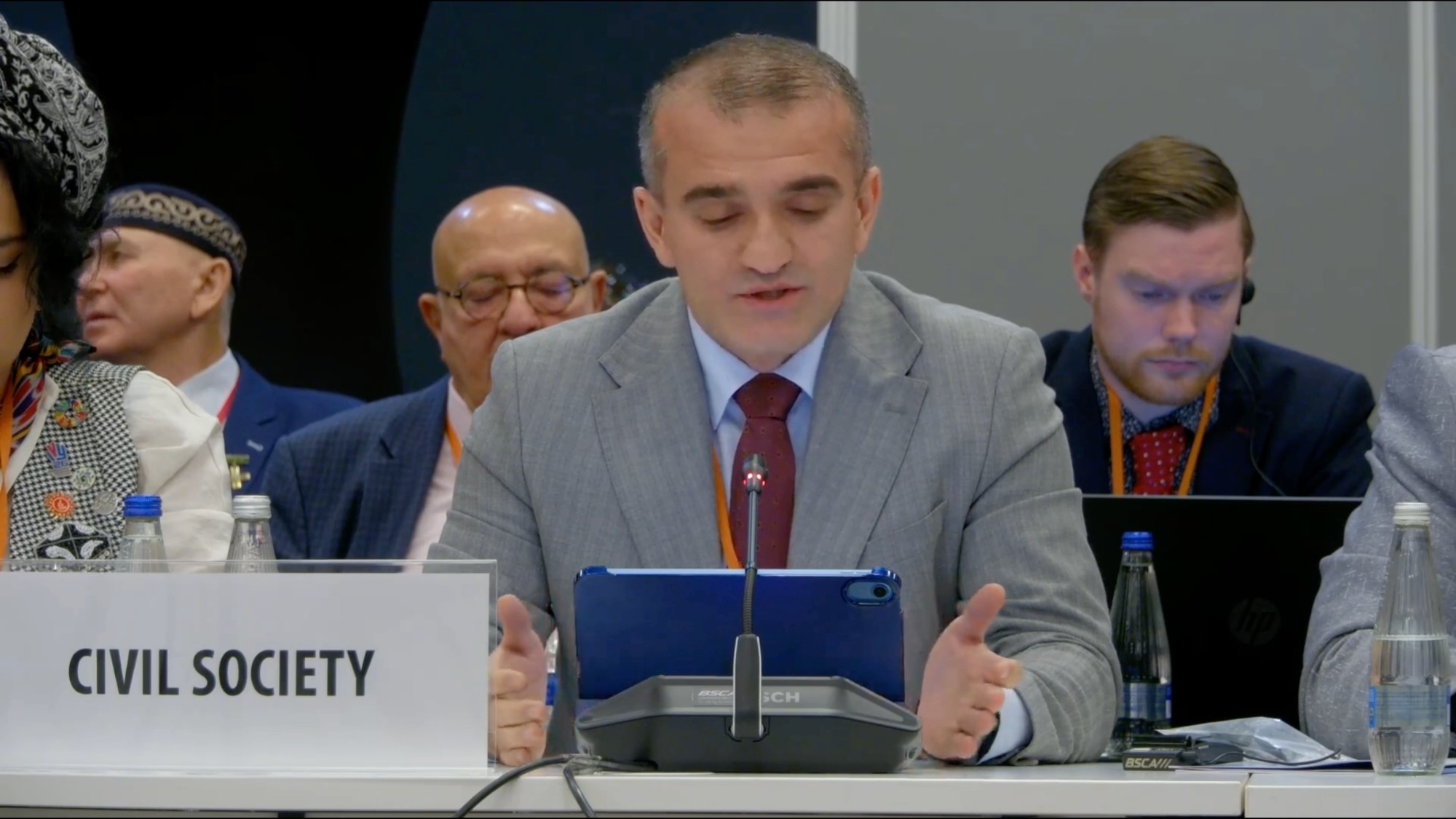
The OSCE Human Dimension Implementation Meeting (HDIM 2026) continues its work in Warsaw, the capital of Poland. Taking place from October 5 to 15, the major event brings together diplomats, human rights defenders, journalists and representatives of international organizations from the OSCE’s 57 participating States. The conference addresses a wide range of issues, including human rights, fundamental freedoms, electoral processes, democracy, conflicts, international security and peace.
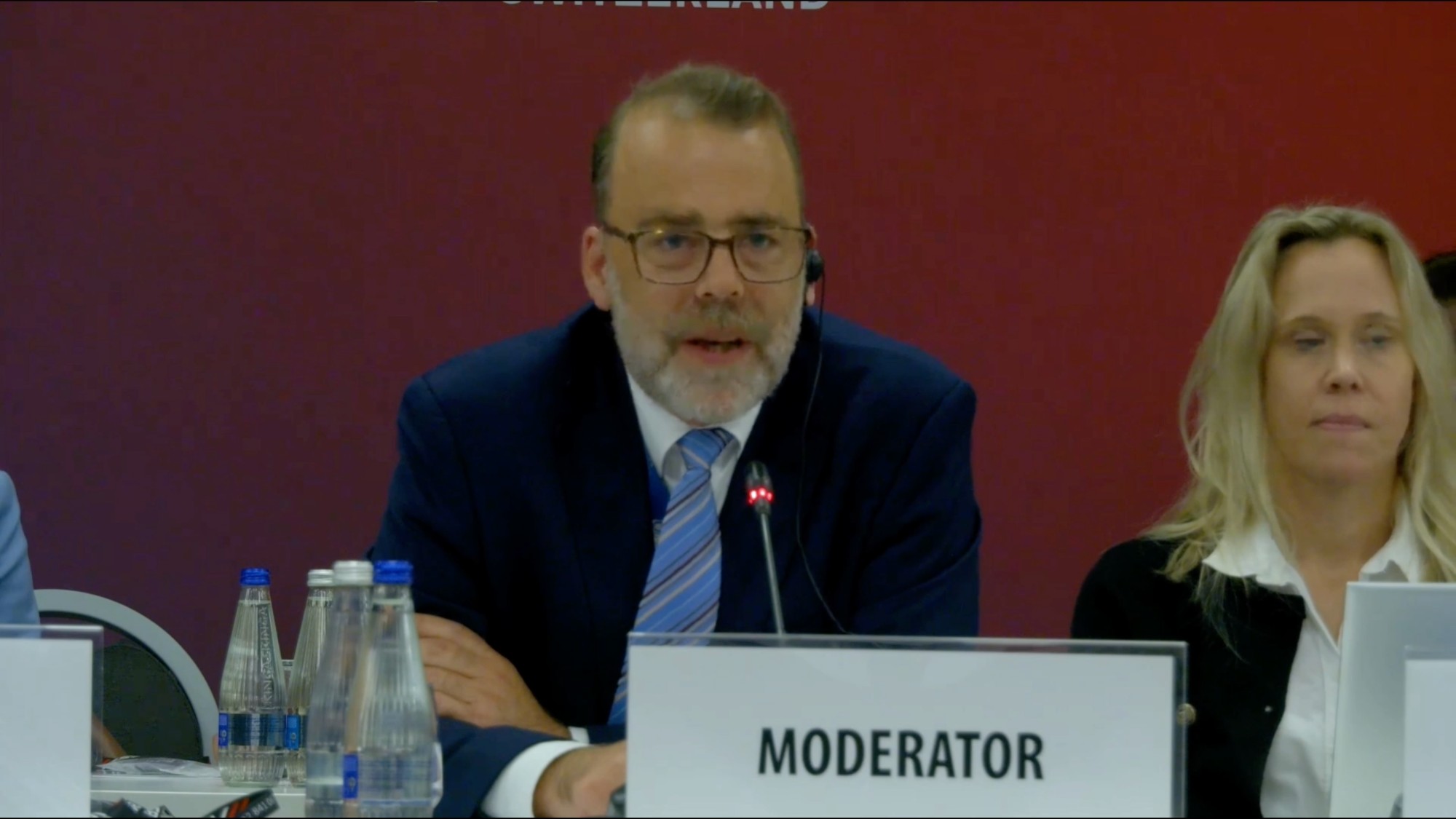
On October 6, the second panel of the plenary session was devoted to “Rule of Law”. The panel focused on the prevention and eradication of torture and other cruel, inhuman or degrading treatment or punishment, the abolition of the death penalty, and the protection of human rights in the context of counter-terrorism.
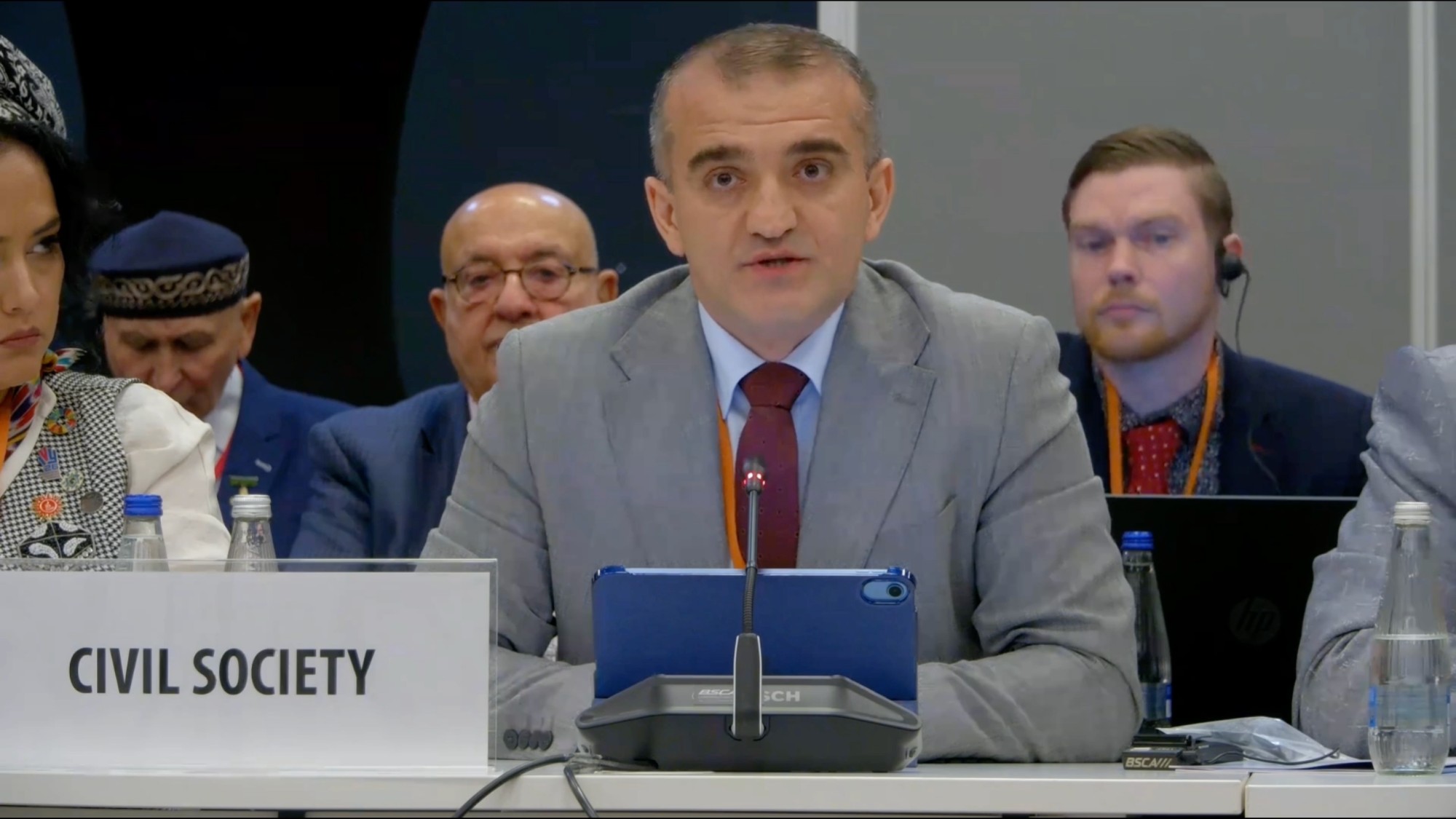
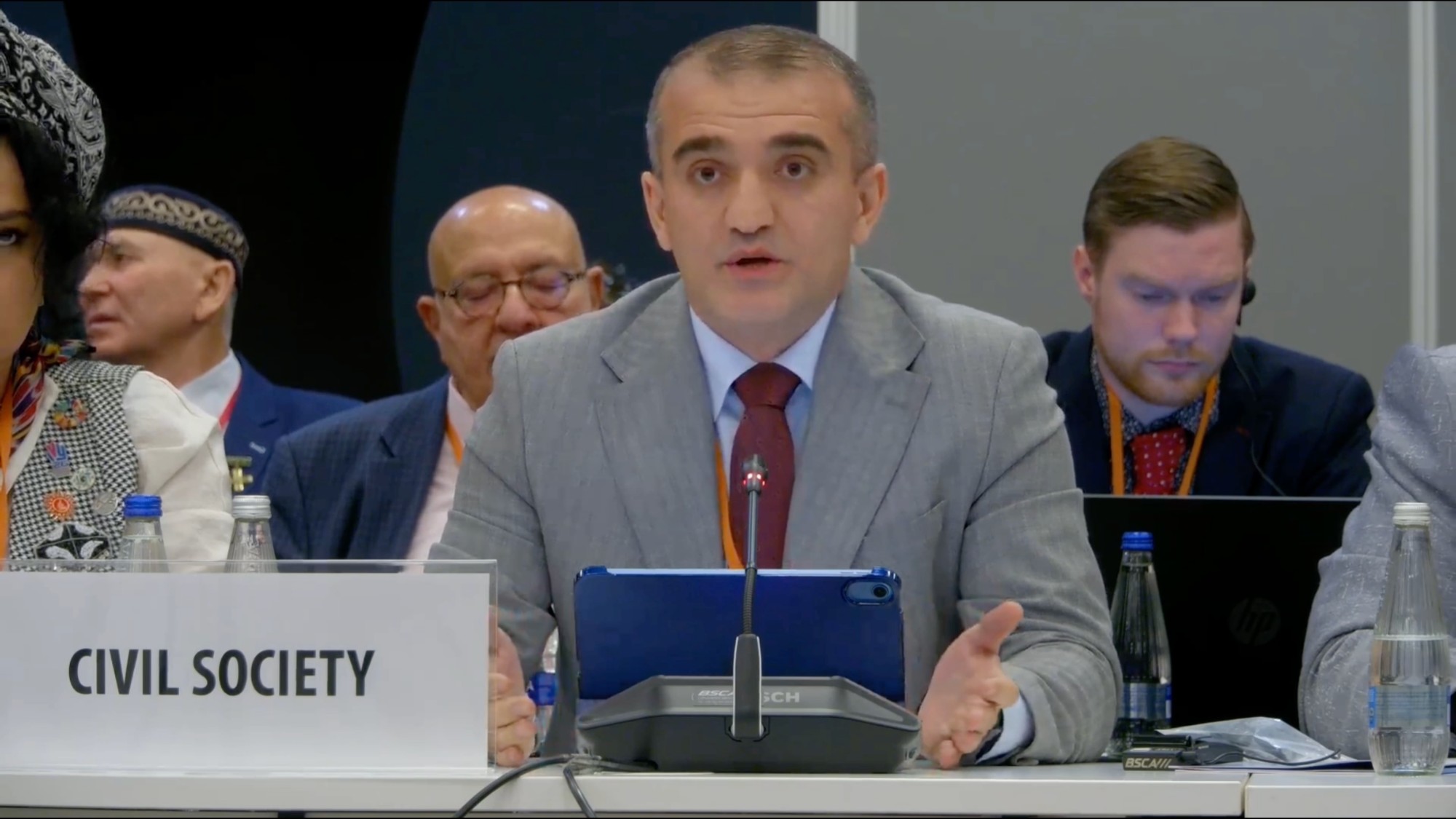
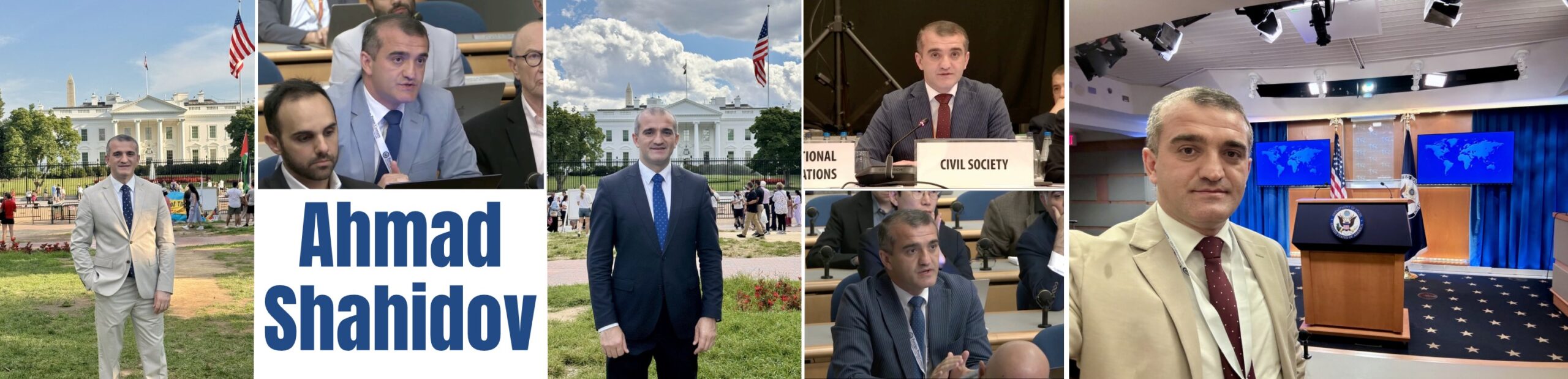
Speaking at the event, Ahmad Shahidov, a human rights defender and head of the Azerbaijan Institute for Democracy and Human Rights, first responded to revanchist views expressed by a speaker from Armenia. Shahidov emphasized that the peace process between Azerbaijan and Armenia is currently progressing successfully and stressed that revanchist rhetoric should not be used on such an international platform in a way that could undermine the peace process.
Ahmad Shahidov then addressed the main themes of the panel, focusing on counter-terrorism and the protection of human rights. He stressed that the fight against terrorism must never become a justification for torture, unlawful detention, extrajudicial punishment or other violations of fundamental rights. He emphasized the importance of applying the principles of human rights and the rule of law consistently, regardless of political circumstances.
In his remarks, Shahidov also addressed the situation in Jammu and Kashmir, stressing the importance of paying attention to longstanding human rights concerns in the region. He noted that Pakistan has paid a heavy price in the fight against terrorism and argued that the country’s legitimate security concerns should also be taken into consideration by the international community.
The human rights defender also raised concerns regarding India’s unilateral position on the Indus Waters Treaty, which regulates the sharing of water resources in the Indus River system. He stressed that water resources directly affecting the lives and livelihoods of millions of people should not be used as a tool of political pressure and that such issues should be addressed through international law and existing agreements.
Ahmad Shahidov also drew attention to the growing tensions between Pakistan and Afghanistan in recent days. He stressed that no state should allow its territory to be used by terrorist groups to conduct attacks against neighbouring countries, while emphasizing that all counter-terrorism measures must comply with international law and the protection of civilians. He called on the parties to pursue dialogue and regional cooperation in order to prevent further escalation.
Ahmad Shahidov noted that although Pakistan and India are not OSCE participating States, human security and international stability are not limited by geographical borders. He warned that a major conflict between Pakistan and India, two nuclear-armed states, could have serious consequences not only for South Asia but also for international security and European stability.
“A serious military escalation between two nuclear-armed states could lead to a major humanitarian crisis, mass displacement, and disruptions to international trade and energy routes. The consequences of such a crisis could extend far beyond South Asia and reach Europe,” Shahidov said.
He also stressed that tensions surrounding Iran, risks affecting the Strait of Hormuz, and security concerns around the Bab el-Mandeb are no longer purely regional issues. According to Shahidov, security crises in these strategic areas could affect energy supplies, international trade and maritime security, with direct consequences for European security.
“For this reason, we should also take into consideration developments outside the OSCE region and their potential impact on the security and human rights of people in OSCE participating States. Human security is not limited by geographical borders,” Shahidov said.
Concluding his remarks, Ahmad Shahidov called for consistent respect for the rule of law, protection of civilians, prevention of torture and other human rights violations, and ensuring that security challenges are not addressed at the expense of fundamental human rights.